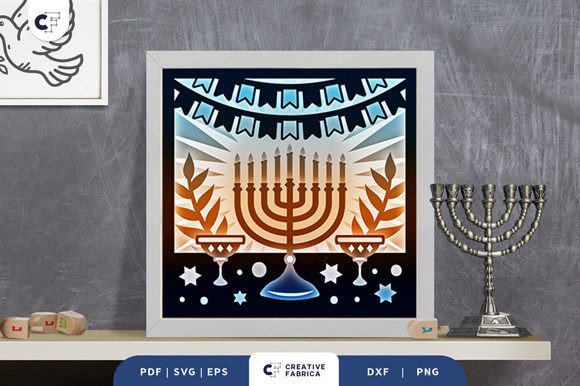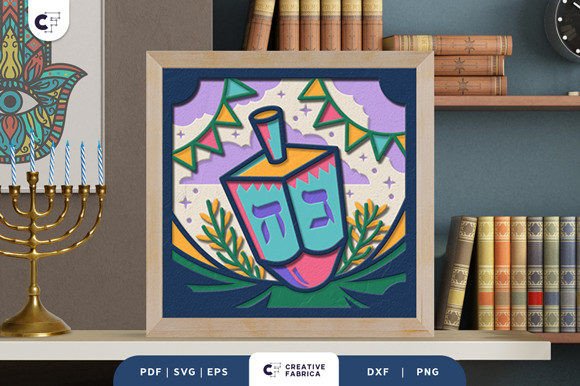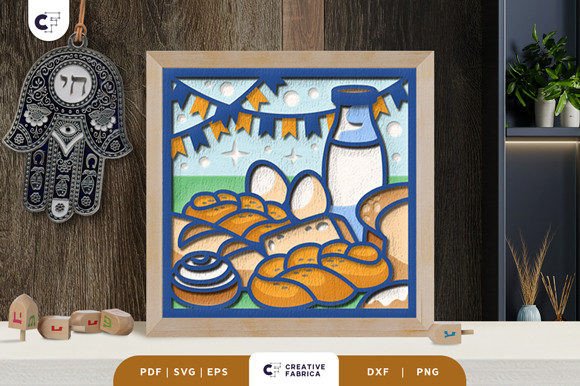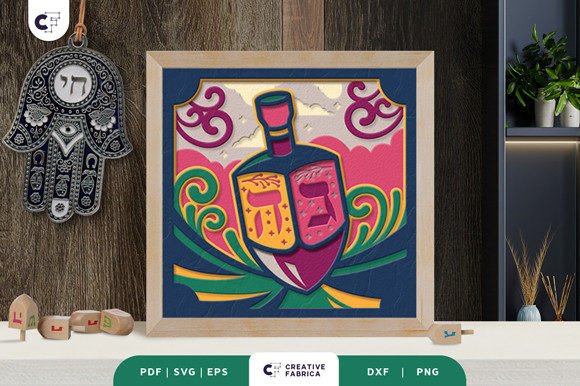
Menorah in the Window 3D SVG
As a brand designer with years of experience, I always look for graphic design assets that can elevate a small business’s visual identity. The Menorah in the Window 3D Shadow Box is one such asset that offers both aesthetic appeal and practical utility for local business branding, product packaging, and promotional materials.
First Impressions: A Festive and Elegant Visual Language
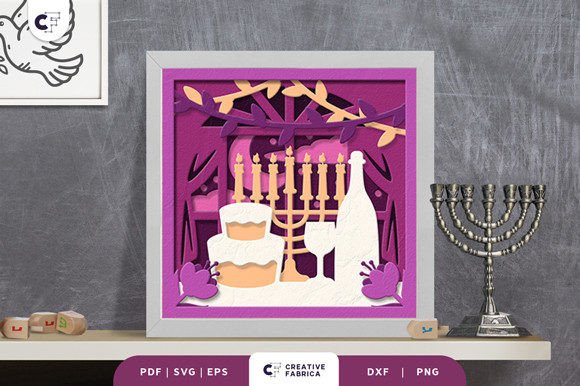
The Menorah in the Window 3D Shadow Box immediately evokes a sense of tradition and celebration. Its layered, square paper-cutting style suggests a handmade, artisanal quality that aligns well with boutique stores, artisanal food businesses, and seasonal product campaigns. The design feels warm, inviting, and decorative, making it ideal for brands that want to communicate a sense of cultural richness or holiday spirit.
This asset leans into a festive and elegant mood, which could work well for a Jewish-themed bakery, a skincare brand with a focus on natural ingredients, or a home decor shop looking to add a touch of cultural flair to their product labels.
Real-World Applications for Small Business Branding
For small business owners, the Menorah in the Window 3D Shadow Box can serve as a versatile design element across multiple touchpoints. It can be used in logo design, where its intricate details might inspire a more symbolic or emblematic approach. In product labels, it can act as a subtle accent that reinforces brand personality without overwhelming the message.
When applied to packaging design, this 3D SVG can become a standout feature—especially for seasonal products like candles, soaps, or holiday treats. It also works well as a decorative element on hang tags, thank-you cards, or stickers, adding a unique touch that differentiates a brand from competitors.
In social media graphics and website banners, the Menorah in the Window 3D Shadow Box can serve as a hero image, drawing attention and creating an emotional connection with the audience. For print materials like flyers or posters, it adds a level of sophistication that can enhance the overall marketing visuals.
Supporting Business Presentation and Brand Identity
Using the Menorah in the Window 3D Shadow Box in a real-world project can significantly improve a business’s first impression. Its clean lines and structured composition help establish a stronger visual hierarchy, ensuring that key brand elements remain clear and prominent.
For a handmade soap business or a local coffee shop, this design asset can reinforce a consistent brand identity across all touchpoints. It helps build customer trust by presenting a more professional and polished appearance, especially when used in conjunction with other design elements like typography and color schemes.
Additionally, the asset supports better shelf appeal. In a retail environment, a well-designed package with a striking visual like the Menorah in the Window 3D Shadow Box can catch a customer’s eye and encourage them to pick up the product.
Where It Works Best: Branding and Promotional Use
The Menorah in the Window 3D Shadow Box excels in applications that emphasize decoration, storytelling, and visual impact. It’s particularly effective as a product label, where its intricate details can add a premium feel to a digital product or physical item.
It also shines as a hero graphic in promotional banners, seasonal packaging, and social media campaign graphics. For a boutique store or a children’s product brand, this design can create a cohesive visual language that resonates with the target audience.
When used in product mockups, the asset allows designers to experiment with different layouts and color combinations, ensuring that the final design meets both aesthetic and functional goals.
Where to Use It Carefully: Avoiding Overdesign
While the Menorah in the Window 3D Shadow Box is visually appealing, it may not be suitable for every design context. In formal corporate branding, where minimalism and clarity are key, this asset could feel overly decorative or distracting.
It should also be used cautiously on very small labels or crowded product packaging, where the intricate details might not translate well. In areas with legal information or ingredient lists, the design could compete with essential text, reducing readability.
On low-contrast backgrounds or in luxury minimalist brands, the asset may not align with the desired aesthetic. It’s important to test it in various contexts before finalizing its use in a design project.
Practical Designer Notes for Real Projects
Before incorporating the Menorah in the Window 3D Shadow Box into a client project, I recommend testing it on real packaging mockups to see how it translates in print. Check how it looks in black and white, and preview it on small labels to ensure visibility and legibility.
Test the design with your brand’s color palette to confirm that it complements the existing visual identity. Compare it with competitor packaging to ensure it stands out while still fitting within the market’s expectations.
Review PNG transparency and inspect SVG or vector editability to make sure it can be customized as needed. Test it alongside different font styles—serif, sans serif, script, handwritten, and display fonts—to find the best typographic pairing.
Finally, always confirm the commercial license before using the asset for client work, business branding, or physical product sales. This ensures that you’re compliant and avoid any potential legal issues down the line.
Conclusion: A Versatile Asset for Seasonal and Cultural Branding
The Menorah in the Window 3D Shadow Box is more than just a decorative illustration—it’s a powerful tool for small business branding, product packaging, and promotional visuals. Whether you’re designing for a handmade soap business, a seasonal bakery, or a local boutique, this asset can help create a stronger, more memorable brand presence.